Malchinguí: getting to know the place behind La Lombardia
For someone discovering La Lombardia from a distance, Malchinguí may begin as an unfamiliar name. For our family, it is the setting of a property we know through working the land. Connecting those two perspectives is a good way to introduce the finca: first the place, then the details that make it ours.
Malchinguí is a rural parish in Pedro Moncayo canton, in Ecuador's province of Pichincha. The parish's local government provides a starting point for learning about the wider community. La Lombardia is one family property within that setting; it does not stand in for the experience of everyone who lives there.
Near the equator, in an Andean setting
La Lombardia lies near the geographic equator, at approximately 2,600 metres above sea level according to the family's current description. Those two details belong together. The word “equatorial” alone leaves out the elevation and the Andean landscape visible in the property's photographs.
They also help explain why a broad label can only take a reader so far. To understand an individual farm, it is useful to ask what grows there, how the land is used and what the people caring for it want to preserve. A latitude or altitude cannot answer those questions by itself.
Look at the photographs as a sequence
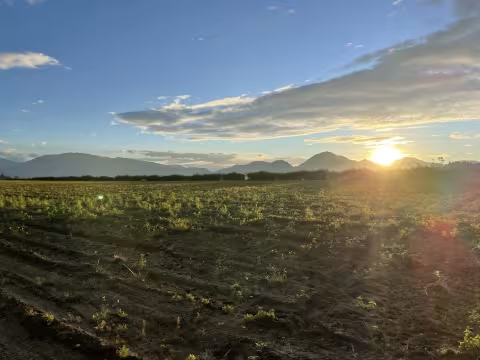
The family's photographs show different parts of the place: the house and its surroundings, cultivation rows, open fields and mountain silhouettes. In the owner's sunset image, low sunlight gives the field a different character from the views taken during agricultural work.
Looking at these images together is more informative than asking one photograph to explain the entire property. The house introduces a family setting; the cultivation photographs bring the work into view; the wider landscapes give that work its surroundings. Each is a partial view of the same place.
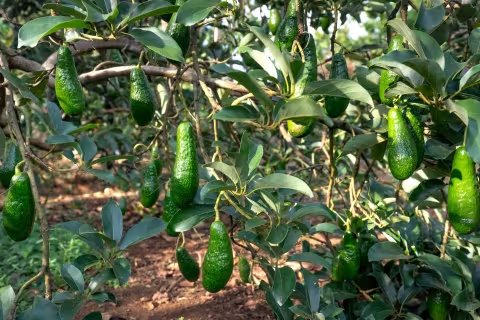
The distinction between those photographs and illustrative images matters. A stock avocado photograph can help identify the crop. The family's own images introduce La Lombardia itself. Neither needs to carry a story it cannot show.
A farm with work in progress
Hass avocado cultivation is central to the property's present agricultural identity. The family describes approximately 1,000 plants and a drip-irrigation system. Those are concrete details of a working plantation, rather than a ready-made story about what every farm in Malchinguí grows.
The family is also exploring a possible solar future on part of the land. That interest sits alongside the existing agricultural setting. Seeing both helps a visitor understand why this website brings together the land, cultivation and energy: they are connected questions about the future of one place.
Begin with the part that interests you
A buyer may first want to know about Hass availability. A grower may be interested in irrigation experience. A possible solar partner may want to understand the family's aims. Each begins with a different question, but all benefit from knowing something about the finca before making assumptions about it.
Explore Land & Agriculture for a closer introduction to La Lombardia's work. Malchinguí gives that story its location; the land and the people caring for it give us something more to share.