Agrivoltaics: designing for the crop as well as the panels
It is tempting to describe agrivoltaics with one image: crops growing beneath solar panels. The more interesting question is what has to happen for both activities to remain useful. Agriculture needs to function as agriculture, while the proposed energy system has its own purpose and requirements.
The U.S. Department of Energy describes agrivoltaics as the co-location of solar with agricultural activities under or between panels. It is an active research field, rather than one design for every crop. For a working farm, that makes the agricultural question a good place to begin.
Describe the crop before drawing the structure
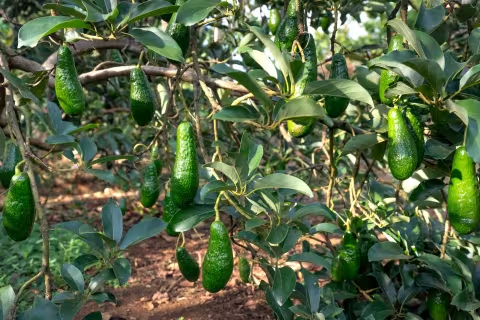
At La Lombardia, Hass cultivation is part of the existing identity. Any proposal to combine it with panels would need to consider the actual plantation. How would the idea relate to the trees' development, the work between rows and the irrigation already in place? What would workers and equipment need to reach?
These are questions a design would have to answer. They are not evidence that installing panels above this plantation would be suitable. Keeping the distinction clear gives agricultural and energy specialists a problem they can examine together.
Make the design tradeoffs visible
The Department of Energy's farmer guide discusses adaptations such as greater panel height and wider spacing. Those changes can affect construction costs, farm access and the electricity obtainable from a given area. A design choice can help one activity while creating a cost or constraint elsewhere.
For an owner, the useful response is to ask what each version is trying to achieve. Would it preserve a particular agricultural task? Would it change the amount of land needed? What would it make easier, and what would it make harder? A drawing becomes more informative when those consequences accompany it.
Give a trial something meaningful to compare
If a credible team proposed a local trial, we would want a clear starting point. What agricultural conditions would be recorded before any change? What would count as a useful result, and over what period? How would the team distinguish a response to the proposed design from other changes in management or conditions?
These are suggested evaluation questions, not a trial already commissioned at La Lombardia. They help explain why an attractive image or a result from another crop cannot settle the question for Hass here.
A review would also need to look at the agricultural and energy outcomes together. Declaring success from only one side would leave the central promise of shared use unexamined.
An idea worth discussing on its own terms
La Lombardia's possible solar future does not depend on claiming that panels and Hass are already compatible. Adjacent agricultural and solar areas are a different idea from growing a crop beneath or between panels. An introduction should say which arrangement it proposes.
That precision leaves room for an informed discussion. Someone interested in agrivoltaics can explain the relevant experience they bring, the agricultural question they would investigate and the evidence needed before considering a larger step.
Explore the solar opportunity if this is your field of work. We are interested in proposals that take the farm's agricultural life seriously while examining what a solar use would involve.